
I love a history podcast. Especially ones by historians deterimed to write women back into history. ‘Natalie Haynes Stands Up for the Classics’ has an episode titled ‘Roman British Women: Claudia Severa’, where she tried to do just this. The episode is twenty-seven minutes long, and one of those women is (besides Claudia Severa) is Cartimandua, the Celtic Queen. It’s a tiny segment, in a short podcast. Enough to spark interest, but creating a whole host of questions about who this forgotten queen was.
When I found a book in Waterstones titled ‘Celtic Queen, The World of Cartimandua’ (by Jill Armitage) I thought I’d found a more detailed account of her life. Despite the book bearing Cartimandua in the title, she doesn’t appear in it for very long..The book goes into amazing detail when it comes to the minutiae of ancient British society. There are chapters on settlements, pottery making, clothing, religion, and everything else that might one might need if one wished to imagine oneself in the Celtic world. However, Cartimandua herself appears in the first chapter, before vanishing until chapter eleven, and then stepping in and out of chapters until we get to chapter twenty-one “What Happened to Cartimandua”.
Spoilers: no one is sure.
Most of what is known about Cartimandua is pulled from Tacitus, the Roman historian. It’s safe to say, that Tacitus was not a fan of the Celtic Queen. This is despite Cartimandua being an ally of Rome.
She handed over one of Rome’s enemies in chains, yet is painted as a devious woman.
Tacitus wrote about her because there was no way to write her out of the events taking place in Britain. He was forced to acknowledge her existance, but he made his opinions on women in power very, very clear.
Various Celtic leaders rose up against Roman rule, perhaps most famously the Celtic Queen Boudica. While I would love to write a blog post entirely around two British Queens standing on opposite sides of the Roman Invasion of Britain, I’m afraid this is the only mention Boudica will be receiving. Instead, we’ve got to discuss Caratacus.
Defeated by the Romans, and with his wife and children captured, Caratacus was one of those Celtic leaders who rose up against Roman rule. He asked Cartimandua to side with him against Rome. She declined, clapped him in chains, and presented him to the Romans.
It’s suggested that her husband was not on board with this decision, but Cartimandua inherited her crown. It’s was her’s, not her husband’s.
While Tacitus (the Roman historian who was forced to write about celtic queens) doesn’t like Cartimandua, he loved Caratacus. The defeated King was dragged to Rome where he was forgiven for his uprising and allowed to live on with his family. He was unable to convince Cartimandua to turn against Rome, but his silver tongue won over the Emperor.
Tacitus, who is our main source of first-hand accounts for this period and these individuals, never visited Britain. He never met Cartimandua, but most modern accounts of her are based on his writings. He was writing about a person he only knew through gossip. Accounts that were likely influenced, if not directly pulled from a man who had found himself trussed up and tossed to the wolves by the person he was telling tales about. Caractus benefited from Rome believing Cartimandua was the bully, and he the victim. Tacitus was more than happy to paint Cartimandua as a foolish woman who made bad decisions. This is despite her technically being Rome’s ally, and Caractus being Rome’s enemy.
After the Caractus incident, Cartimandua divorced her husband Venutius. (The one who didn’t want to send Caractus off to the Romans). The accounts I’ve read by female historians are quick to point out that there is no evidence to suggest that Cartimandua divorced Venutius in favour of her second husband Vellocatus, or that she had started a relationship with Vellocatus before ending her marriage to Venutius.
The rumours that she cuckolded Venutius seem to originate purely from the fact that Vellocatus was Venutius’s shield bearer at one point. The easiest way to discredit a woman in power has always been to accuse her of sexual impropriety, despite the fact that a similar charge against a king would do nothing to sway public opinion on his rule.
At this point, Rome had started to pull back from Britain. Celtic histories were oral rather than written, and Tactitus’ interest waned alongside the Roman Empire, so if there was a record of what happened to Cartimandua it’s been lost. After her divorce and subsequent remarriage, Cartimandua continued to rule as Queen of Brigante. Venutius (husband number one) made two attempts at unseating his ex-wife from her throne.
The first failed due to Rome’s intervention. As a client queen, she was able to call for their aid, and they stepped in to help deflect Venutius’ attack. However, Venutius survived to try again and when Rome’s resources in Britain waned, he attacked a second time, forcing Cartimandua and Vellocatus to flee.
It’s assumed the pair fled to Chester, but there is no record of them arriving or living there. There is also no record of Cartimandua trying to reclaim her crown. However, a lack of record doesn’t warrant the dismissive tone Graham Robb takes in his book ‘The Ancient Paths, Discovering The Lost Map of Celtic Europe’. He only briefly mentions Cartimandua and when it does, it’s frankly patronising.
Robb almost seems to forget that women existed in Celtic Europe outside the role of damsel or daughter in tragic mythologies. On p.131 he mentions philosophers stepping forward between two opposing armies to negotiate peace before the battle can start, followed by a footnote that “this may have been a function of female Druids” as “Plutarch and Polyaenus attributed the power to stop battles to ‘Celtic women’.
‘The Ancient Paths’ is a fascinating book to read, but Robb’s ability to write 298 pages with barely a woman in sight (unless she’s dying tragically) is a little galling. Especially when taunted with footnotes such as the one above.
Cartimandua is enticing partly because she is mysterious. She seems fiercely independent, and Tactius’ treatment of her in his history makes me like her all the more. If there is one thing most modern women can understand, it is the male gaze painting women with power as villains. I don’t think that her losing her crown makes her weak. Venutius spent years plotting his coup and picked his timing well (the second time around at least). If Cartimandua had been a King, would her alliance with Rome have been seen as duplicitous, or as tactically astute? If she had been a man, would her divorce and remarriage have opened her up for attacks against her fidelity? Would her fidelity have mattered if she was a King? Would she have even been notable for comment by Tactitus if she had not been female? Why do we still need to ask these questions when looking at women in history?
Writing Cartimandua into my new poetry collection ‘Stone Tongued’ feels like a small step towards balancing the scales when it comes to how she has been treated by history. I haven’t tried to give her a happy ending where she vanishes into the sunset to live out her years with Velloctus, and I haven’t rewritten history to have her raise an army to vanquish her ex-husband, but I have tried to give her a moment where her voice can be heard. Cartimandua isn’t the woman in Tacitus’ history or the villain in whatever tales Caratacus spun for the Roman Emperor. She was a Celtic Queen who ruled the Brigante and disappeared somewhere in Northern England during the 1st century alongside her second husband. She was able to keep her crown despite the Roman invasion, maintaining a kingdom. This was not a weak person. She does not deserve to be dismissed because of her gender.
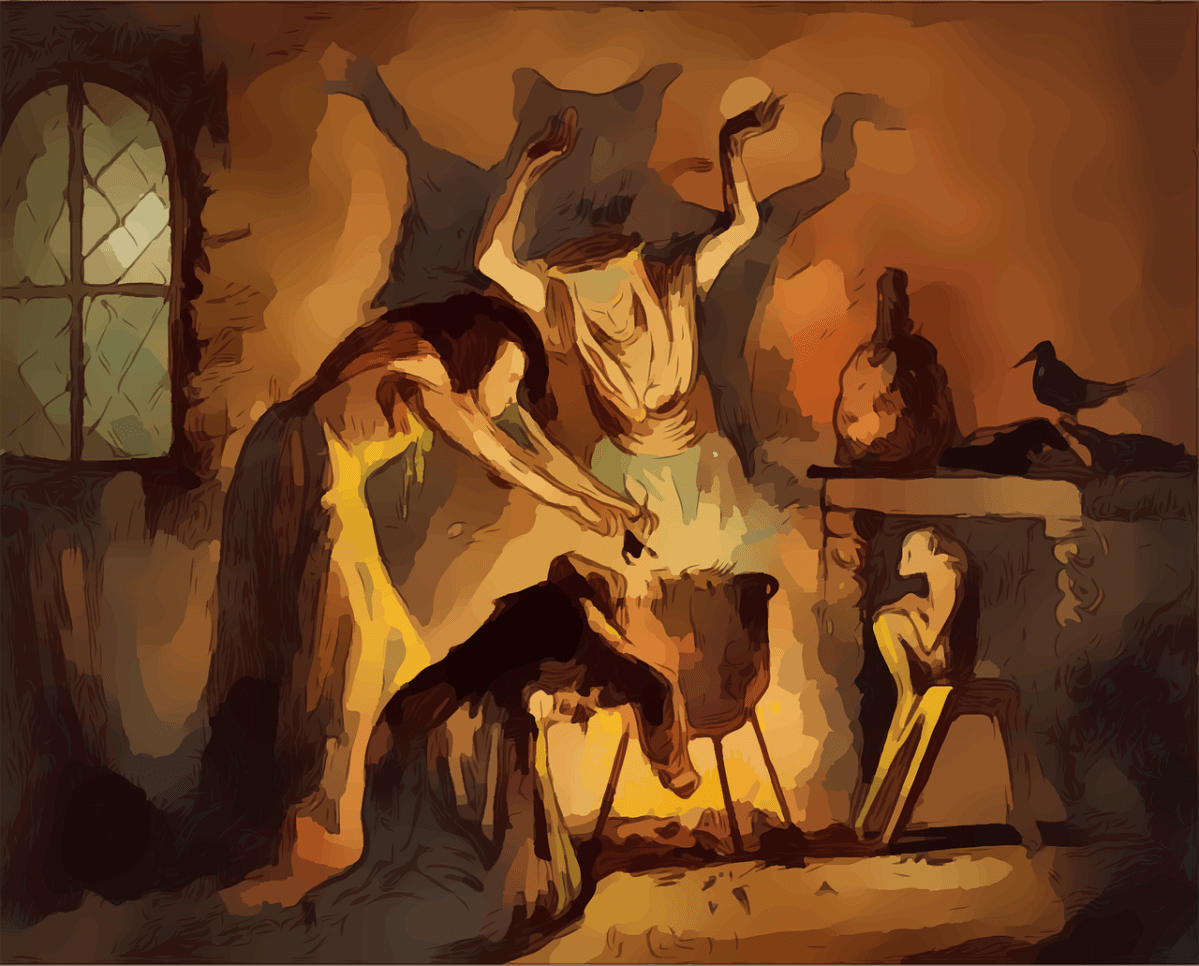
Cartimandua Fleeing For Chester by Carol J Forrester
Perhaps I should not have wreathed Caratacus in chains.
But his mouth was trouble
and his words licked like flames around my husband’s ears
until they spoke with matching tongues of smoke
and ember.Maybe I should have doused them both.
Now all fire is forbidden for fear of discovery
and cold scuttles up my spine
sharp as any reminder.Sleep is brief and when I dream
it is of Rome, and Caratacus with his burning laughter.It is of Venutius, and his kin
how I might break them and retake
all that is mine.Let them call me treacherous, or cunning
or any other word reserved for women.
I am no less a queen.






 Carol J Forrester
You must be logged in to post a comment.