
How To Create A Blogging Schedule – Three Tips On Building A Schedule For Writers

meOne of my main focuses this month has been to create some sort of schedule for Writing and Works to try to get more organised with my posting. This isn’t the first time I’ve tried to tackle this challenge, in fact I’ve put together a few schedules over the last seven years, but in the end they all fell apart. Despite these failures, the fact remains that having a blogging schedule helps to grow your audience and it can help keep you on track when inspiration is running low. Having a plan can also keep you from running out of steam and it lets your readers know what to expect. For example, there are some blogs that I visit on the same day each week because I know they will be positing something that I’ll be interested in on that day. I know their schedules and I follow them as a reader.

So, today I am going to go through three points that I’ve found helpful while trying to build a blogging schedule. You might have other tips to add but these are the ones I find myself coming back to over and over. These are my key points.

1. Daily Prompts.

The Daily Post puts up a new prompt each day and these can be a great source of inspiration for bloggers. While some prompts have guidelines for responses such as word counts or the media that should be used, The Daily Post leaves your options wide open. You can write a poem, a story, an article, or you could even create a piece of art to match up with the word of the day. Furthermore, if that day’s prompt doesn’t inspire you then you can generate a different one and take that instead. The options are very much endless.

The downside to using daily prompts, and this is if you only use the current day prompt, is that you can’t plan ahead and schedule a post in advance. It’s a read and respond situation. For some this is perfect and most days I find that I can churn something out that hits the mark. Other days I don’t want to write for that prompt or I just don’t want to write at all, and this means there isn’t a post for the day. As a blogger you are less prepared to deal with surprises in your posting schedule and less able to adapt. This is why just using the daily prompts doesn’t work as a sustainable plan in the long run.

2. Link Ups And Blog Hops

Often with link ups and blog hops you’ll have the same issue of having to create a response in a set amount of time as you would with daily prompts. However, there are some link ups that fall outside of these limitations. The Weekend Coffee Share hosted by The Part Time Monster  is a weekly link up, but the point is to simply write about your week as if you were having a chat over a cup of coffee. In theory you could prepare a post for this a couple of days in advance and schedule it to go up over the weekend. You could also build the post over the duration of the week and then edit it on the day you want to post.

Finding these sort of link ups not only provide you with a community, but it gives you structure to your week which really helps if you’re like me and find the idea of daily posting rather daunting. You could schedule your whole week around link ups and blog hops if you wanted, for example:

Monday:

Dverse Poets Pub – [Mondays are Haibun or Quadrille nights with a prompt to help you get started.]dverselogo

Tuesday:

Dverse Poets Pub – Poetics Night – [Another prompt based poetry night but not limitations of the from used.]

Wednesday:

Friday Fictioneers – [The prompt for Friday Fictioneers is released.]

WWW Wednesdays – A book review link up. [What have you read? What are you reading currently? What are you going to read next?

fridayfictioneers1img_1384-0

Thursdays

Dverse Poets Pub – Open Link night or Meeting The Bar. [The events alternate the same as Monday nights.]

Friday

#FreewriteFriday – Found this a while back but I can’t remember where and it still works as a hashtag. Write a post from beginning to end without putting your pen down or going back to edit. You can tweak a little once you’re finished but the idea is to keep it as pretty much in the original condition. As you’re using a hash tag and not a link up you can schedule this in advance.

Flash Fiction Challenge – Hosted each week by Chuck Wendig. He provides the prompt and the word count, you crank out the story.

Saturday

Weekend Coffee Share – As mentioned above. This is a weekend blog party where you write a post and you can link up on Part Time Monster’s site and you can add the hash tag #WeekenedCoffeeShare to find more contributors on twitter. It’s a really fun, friendly community and it’s a nice chatty style post for the week. *Can also be done on a Sunday*

weekendcoffeeshare

Sunday

Sunday Photo Fiction – Write a story of 200 words based off the photo prompt.

I could go on and list hundreds more events but we’d be here forever so I’ll leave it at that. There is of course a downside to this sort of planning and I’ll touch on it in my final point as well. Having a schedule that is too rigid can be just as bad as no schedule. It can stifle creativity and in some cases leave you stagnating. It’s important to find a balance in your blogging, and that’s my point for the number three in this list.

3.Forging Your Own Path

The top piece of advice I can offer is to sit down and think about what you love to write and what you’re posting already. Set out the days of the week of a piece of paper and work out for yourself what makes sense when it comes to a blogging schedule.

I know that I can write a piece of freewriting each Friday. I know I can write a poem for DVerse poets most Mondays because their prompts work for me. These are key points in my week that I know I can hit. I can put this as concrete markers in a schedule because the chances of me not wanting to write those posts or not being able to are incredibly low.

You also need to learn your limits. WWW Wednesday is a weekly prompt but I do it once a month on the last Wednesday of the month because I know I will always have material to work with that way. I don’t always read a book a week, but some weeks I’ll read three. My reading fluctuates and I know that once a month is the perfect regularity for me to write a book review piece.

Featured Image -- 4635I also allow myself some flexibility. I have learnt that I’m not very good at keeping to a schedule when it comes to writing a series. Both Headquarters and Solitary Creatures are currently sat on the back burner for the moment because I’m focusing on my novel, but if I do write a post for them I’m probably going to bank it rather than hit publish. That’s because I now know it’s better for me to stockpile those chapters and schedule them, then it is to try and force myself to write a new one each week. The editing and planning it takes is just too much stress alongside the rest of my writing. This was a hard lesson to learn but one I eventually got my head around.

In conclusion, finding a way to merge all three of these points is what I’ve found works best for me. The regularity of blog hops and link ups gives me a basic structure while the freedom to add alternative posts, as and when, keeps me interested in writing and stops the blog from stagnating. Working on non-prompt material allows me to schedule posts in advance and shift my focus from sitting at a laptop writing new content every day to writing chapters for my book without sacrificing my blog. I’ve still not managed to completely grasp posting in advance as many of you will know, but then again I’m still learning too. As with last week’s post on Seven Tips from Seven Years of Blogging,  this piece is just as much for my own benefit as anyone else.

If you don’t pinpoint your weaknesses you can’t fix them, and that’s what I intend to do. Over the last seven years I’ve learnt a lot about blogging and to celebrate the seven year anniversary in October, I’m doing a weekly series of posts about those little bits and bobs I’ve picked up. Next week I’ll be tackling one of the toughest things I’ve tried to do here on writing and works, and that was organising guest posts. In the meantime I hope you’ll stick around and check out some of the poetry and stories here on the site. Thanks for reading.


What Are Little Girls Made Of?: Breaking The Stereotypes In My Head

What are little girls made of?

Sugar and spice and all things nice

That’s what little girls are made of.

You know something, until I was eleven, ‘SUGAR!’ was a swear word. Mum didn’t want to swear in front of my sister and I so she’d say ‘Sugar’ instead. I even got in trouble for copying her once, which looking back seems a little ridiculous as I wasn’t technically swearing, and it hasn’t stopped me cursing as an adult. She does swear in front of my sister and I from time to time these days, but sugar has remained fairly prominent in the family vocabulary. It’s quite amusing.

Aside from being my family’s swear word substitute, sugar is also one of the key ingredients in creating little girls. If you have any snips, snails, or puppy dogs tails lying around then you can make yourself a little boy instead, but for this post we’re going to be focusing on the feminine. Nothing personal, I just have the first hand knowledge to go with that half of the poem and only a vague understanding in regards to the other half.

Off the top of my head, I think it was my great gran who first told me this little rhyme but honestly I can’t remember. It’s one of those poems where I feel like I must have known it from the moment I was born. It’s so ingrained in my memory that no matter how hard you shake me, it won’t fall loose. Which is frustrating as I can’t work out how to replicate that with actual, useful information such as changing a car tyre, replacing a fuse… erm… laying bricks? Yeah, that’s useful information. Who doesn’t need to know how to lay a brick from time to time in their life?

IMG_1761It’s one of those poems that everyone knows but no one seems quite sure where it came from. Don’t worry, this isn’t a history of the poem post, I think someone did explain the back story to me once but I have since forgotten it and you’re more than capable of heading over to google to check for yourselves. What I want to talk about is how this rhyme ties into the ideas of how girls should act, and the impact that has had on me. Or more simply put, I’m going to talk about shoes.
I saw a Facebook post from a friend of a friend talking about Clarks shoes and how Clarks should be ashamed for the gender bias in their shoe selections. This woman pointed out that the boys’ shoes were often much sturdier and were designed for running, climbing, ‘being boys’, while the girls’ shoes were more angled towards ballet flats and the likes. She said that her daughter knew what she liked, but wouldn’t buy something that was clearly marketed at boys. This struck a chord with me.

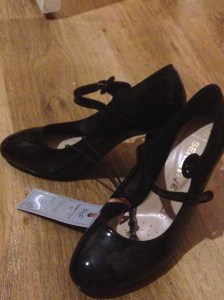
Now I normally wear heels no matter the occasion, but I had never considered how shoes are presented to me in a shop. On Monday I was in Tesco’s trying to find a couple of pairs of shoes to wear for work and spent about twenty minutes browsing through the women’s shoe section. (There was something of a shoe malfunction earlier in the day but we won’t go into that). I wanted two pairs of shoes, one pair of court heels and a pair of ankle boots. I got both. (There was some difficulty involved, I have wide feet which means I struggle to find shoes that fit me.) What I realised today is that I had picked up and put down a pair of shoes that I’d quite liked, and thought about buying, just because I was worried about them looking too masculine. I had made a decision based on what I thought women’s shoes should look like and dismissed the only pair to really catch my attention because of that.

Now, shoes are perhaps my second favourite thing to buy, beaten only by books. However, when I look at my collection there is hardly a ‘reasonable’ pair among them. They almost all have heels, some I rarely rare because they are hugely uncomfortable but I have them because they look amazing, and a lot have been worn completely through. I’m not saying that I don’t put my shoes through a fair deal day-to-day, but I have noticed that the shoes I buy don’t last many weeks before they need re-heeling or in some cases, resoling. Actually, I probably only own two practical pairs of shoes. A pair of brown, knee high boots with a flat sole that came from Sainsbury’s (£25 I think and perhaps one of my best buys ever, super comfortable), and the wellies I’ve owned for donkey’s years. (Farmer’s daughter, I will always own a pair of wellies.) Both I bought because they were handy to have for point-to-points or other countryside events.

IMG_1766Even the two pairs of shoes that I bought yesterday don’t fit into the category of practical and I told myself on the way to Tesco’s that I wanted to buy some ‘sensible shoes’. The ankle boots have a two inch wedge heel and are suede, the court shoes have a similar IMG_1760heel and while being a more waterproof material, don’t cover my whole foot. Basically, if I need to cross a particular wide puddle, I’m stuffed.

The ideas I’ve carried with me into adulthood about how a girl should dress mean that I wasn’t willing to buy shoes I actually liked and wanted to get. The ones I picked up and put back down would have been perfect for the unending rain here in England and still looked really smart for work. They were women’s shoes for god’s sake! I still couldn’t bring myself to get them though because I knew I’d feel self-conscious wearing them. That in itself is utter nonsense. My mother is the most practice women you would ever meet. She even shops in the men’s section for trouser because, and I quote, ‘they don’t make deep enough pockets in women’s trousers.’ She doesn’t care. She wants deep pockets so she will buy the trousers with deep pockets. She raised both my sister and I to focus on the practical rather than the aesthetic, so where did I get this idea that I can’t wear something because it might be ‘too masculine’?

Really this comes down to me being willing to step outside my comfort zone and not think so much about what other people might be saying about me. Shoes are to keep our feet warm and dry. As long as they do that, why should I worry about them matching with some childish idea of sugar and spice and everything nice?

To be honest, I don’t even like this rhyme. It’s always annoyed me somewhat, and it annoys me even more when I realise that I have taken some of the gender stereotype in it to heart.  I’m not saying that it’s a completely horrible message. Sugar and spice could be seen as an awesome combination of beauty and edge, but I need to re-evaluate that image of women and girls in my head and realise that I don’t need to match anything but my own standards.

To finish:

What are little girls made of?

Sugar and spice and whatever else they want.

That is what little girls are made of.


Inspired by Daily Post: Spicey

I’ve Broken My Own Writing Rules. Again! #WeekendCoffeeShare

It’s Sunday morning afternoon, and I’m trying to keep a close eye on the weather outside because we’re meant to be having an afternoon of rain and there’s washing on the line. Actually, we’re meant to be having an entire August of rain here in the UK. According to the Independent (I only read the headline), this last week’s saturation of sudden, miserable downpours, is here to stay for the entire thirty-one days. I only mention this because writing this post might get interrupted by me blitzing outside like a made woman to yank in the majority of my wardrobe before it gets soaked.

Besides the weather turning against me this week, things have been going surprisingly well. I started a new job on the 17th August and it feels like I settling in okay, my writing has been on the upturn, and things around the house seem to be on an even keel. There’s just one thing bugging me, and that’s the fact I’m breaking my own rule when it comes to writing. I’ve been tweaking the novel.

Chapter Twenty-Four has been on my to-do list for the past four months and over the weekend I’ve only managed to get the first six hundred words written. The problem is that I keep wanting to redraft it. Those six hundred words are the third attempt at writing that chapter and I try to avoid doing that. If I’m drafting I want to get the whole draft completed before I go back and start tweaking things, otherwise I end up spending too much time dotting ‘i’s and cross ‘t’s. I get disheartened and I don’t finish the chapter. I don’t even know if this version is any better than the others and I’ve stalled again at the six-hundred word mark. This afternoon’s challenge will be to go back and try to get that chapter finished and filed away. If I can do that then I can get on with writing the rest of the book and worry about editing when it comes to it further down the line.

Blog wise, this week has been pretty successful and I’m really happy with the posts that I’ve been putting out. My poem Drawstrings keeps gathering views and it’s lovely to see so many people taking the time to comment. It’s quite a personal poem and it tackles anxiety so there’s always a bit of apprehension for putting up pieces like that, but I think it’s probably one of the best poems that I’ve written.

I’m also trying to set up a weekly writing prompt. On Friday I launched The Friday Fiction Linkup. The challenge for the first week is to take the opening of a story and carry it on in a post on your own blog. If you don’t want to write the full piece then you can comment a paragraph that carries the story on in the comments section below and leave it up to someone else to add the next bit. There don’t seem to have been any takers yet but I’m hoping we’ll get a few people having a go as we get closer to the deadline next Friday.

As well as poems and new link ups, I’ve tried my hand at putting together a post containing seven things I’ve learned in seven years of blogging. Why Am I Even Doing This? – Tips From Seven Years Of Blogging went up last night and stemmed from my own ponderings about whether or not I’ve actually managed to progress or learn anything since I started this blog. I’ve had some lovely comments on it and it would seem that some people have even found my seven tips somewhat useful.

Aside from blogging this week has been one for relaxing and going back to old joys. The pond in the garden is slowly taking shape. The rain is keeping all the plants in the garden lovely and green, and I’ve managed to fill my free time with books and writing rather than housework. I watched Neil Gaiman and Steven Fry’s talk from Hay Festival on Youtube last night and inspired by Chris Riddle’s live drawing even cracked out the paper and pencils to try my hand at a few doodles. Maybe not my best works but I enjoyed drawing them which was something.

Anyway, that’s enough about my week. The Weekend Coffee Share is about the conversation, so how are you all? Anything new going on or is it same old same old? Let me know in the comments below, you know I always love to hear from you. Have you perhaps kicked off something new on your blog? Are you going back to old favourites as well? Did you write something this week that you’re really proud of and want to share with the whole world? Whatever it is, feel free to tell me about it or even leave a link.

Until next week, all the best!

weekendcoffeeshare


Why Am I Even Doing This? – Tips From Seven Years Of Blogging

I started this blog seven years ago and in that time it’s growth has been small but steady. I’m not a fantastic blogger. I take breaks too often, forget to post, throw up stuff before it’s probably ready, but over the past seven years I do seem to have to have gathered a group of followers who comment and like regularly. Who offer the sort of support that helps in the moments when I’m wondering why I even bother to pick up a pen or sit down at a keyboard. Today I wanted to write a post about how to blog successfully. I wasn’t sure that I’m qualified to write that post so instead I’m going to write a post that lists seven of the most important things I’ve learnt during my time on WordPress. Hopefully they will be of use and for those of you who make it to the end, it might even be an enjoyable read.

1. Tags Are Vital But Don’t Overdo It!

We’re going to start at the basics. I apologise. I know it’s a little boring.

When I started blogging I didn’t know what tagging was, and when I realised how important it was to tag your posts I went overboard with them. WordPress is set up so that a post with anymore than fifteen tags gets cut from the reader, and if you post too many different ones you might also get marked as spam. My top tip? Think about the tags you use to find blogs that you want to read. Pick three or four general tags and maybe two specific ones. All my posts are tagged ‘writing’. ‘Poetry’ and ‘flash fiction’ are two others than I use fairly often because I know that the people who want to read that genre will be searching for that in the reader. These tags work for me and once I found them I stuck to them.

*Top Tip* If you’re stumped for tag ideas you can search for the ‘hot tags’ on wordpress and find a list of what’s being used the most at the moment.

Know your audience and aim your tags.


2. Link-Ups and Blog Hops Are Ready Made Communities

Places like the DVerse Poets Pub and Friday Fictioneers are ready made communities that are always will to welcome new people in. Not only that, they are a fantastic place to find inspiration. I get the best feedback on my posts from people in these groups and after a while you start to make connections with those who comment of your blog regularly.

Of course you have to play your part. You can’t simply post and ignore the rest of the entries while still hoping to get everyone coming back to your blog. As with anything it takes a level of commitment, but I’d say it’s worth it. Why not find yourself a blogging event using the Daily Post’s event listing? You might find something you really enjoy.

Take the time to find groups that suit you and get involved with commenting on other’s submissions. This is a great way to boost traffic and make new blogging friends.


3. Proof-Read Your Work

This may seem like a painfully obvious point, but I’ve lost count of the times where I’ve read a blog and all I can see are the spelling mistakes and punctuation errors riddled throughout the post. I’m well aware that my own blog has fallen short on this front before, but it does take a person out of your writing so it’s something that should be taken seriously. It takes five minutes to double check that you start sentences with a capital letter and it’s easy enough to read through a piece and check that your whole paragraph isn’t one single sentence. The last thing you want is someone avoiding your blog because it looks like a five year old wrote it.

Take pride in your work. There is no such thing as the perfect first draft.


4. Know Your Limits. Pace Yourself.

Once again this is a failing of mine that I see again and again. If you can post four times a day, every day for a year, then well done you. However, for people like myself who can go months without posting a thing because we burnout, a different plan is in order.

If you want to post ever day then you need to plan it out. Create a blogging schedule. Look ahead for the year and maybe find some key calendar events that you want to post about. If you can create posts to schedule in advance then do this instead of throwing all you work up in one day. If I’ve posted three times in a day already but have a forth posts just screaming to be written then I schedule it for the next day and give myself some breathing space. This requires a certain level of patience that I’m not great at but in the long run it helps me.

Reducing your posting frequency can help your traffic in some cases. I’ve unfollowed blogs in the past because they’ll put up ten posts a day and none of them will be of any real content. It’s far better to focus on quality and regularity over quantity in the case of blogging.

Force creativity and you get rubbish. It doesn’t matter if you post once a day or once a week, what matters is that you love what your putting out there.

5. It’s Your Blog So Write What You Want

This is a writing blog if you hadn’t already noticed. I know the poetry and the short stories sort of give the game away a bit but I thought I’d make sure you’d caught those subtle hints.

I don’t only post stories and poems though.

I have posted articles of history, fitness, politics, current events, stuff going on in my life, and from time to time, the odd drawing.

I like to draw, so I’ll post photos of pieces from my sketchbook. I’m passionate about the past so I’ll spend a few hundred words telling you about The Celebrated Mrs Macaulay or Ditherington Flax Mill.

These things and things that make me happy just as much as writing so I include them here on this blog. It doesn’t dilute the theme, it just adds to it.

Don’t be afraid to tackle a new topic. As long as you present it well you’ll find readers who’ll enjoy it.


6. Read, Read And Then Read Some More

I’m not just talking about reading other blogs, though that is important as well, I’m talking about reading books, articles, the backs of shampoo bottles. [No joke. Those things can have some pretty clever writing on from time to time.]

Whatever it is you can get your hands on, read it! The best way to improve your own writing is to read someone else’s.

In my case, I consume books so quick I practically swallow them whole, and they are a huge part of my writing as a result. They inspire me and show me better ways of doing the things I’ve been doing for years.

Just remember that when you read something it will probably be the polished, final version. Don’t compare it to the scrawled first draft of something you’ve written and feel like you’re aiming for impossible standards. First efforts might take some rewriting but so did every book on your local bookshop’s shelves.

We all start at the beginning. Someone being better than you doesn’t necessarily mean their more talented. They might just be further along the road.


7. Develop Your Voice

Too often I will read a post and there will be nothing of the writer’s voice in it. This is something that does take time to craft, but it’s also incredibly important. People connect to the writer, not the blog.

For example, there are blogs I read over and over because I feel like I know that blogger, I like that blogger, and I want to see what they have to say now. It’s a form a friendship in some ways. If someone seems to churn out generic posts with no essence of personality then I quickly get bored, but if the blog post makes me feel like I’m standing in the room with someone, chatting away, I’ll most likely read it through to the end.

We’re social animals and we like to feel that connection so give it to your readers. You don’t have to tell them all your personal secrets, just slip a little personality into your writing style.

Your voice is important. It gives a reader something to engage with. Make them hear you, not the article.

So that’s it. The seven most useful things I’ve learnt in seven years of blogging. Perhaps you have your own list, in which case I’d love to hear it! This blog is one of my proudest creations and hopefully in another seven years I’ll still be able to look at it with the same pride and fondness. This blog is very much evidence of how my writing has progressed over time and I’ll be the first to say that there’s always room to build on what you have. Other than that I’m going to shut up as we’ve hit 1500 words and I don’t want the post running any longer.

Thanks for reading. Hope to see you in the comments below.


It Took Me Four Long Months, But I Finally Did The Ironing! – How Not To Write A Novel – Weekend Coffee Share

Now I know what you’re probably thinking. What the heck does writing a novel have to do with not getting your ironing done? Well the answer is quite simple. I’ve been avoiding both tasks incredibly skilfully for a similar amount of time. Chapters have become akin to fitted sheets. I know they need doing, I know that once they are done I will bask in pride of having them tucked away all nice and neat, but facing that keyboard, I mean ironing board, has been beyond me. Even this post is two days late.

This weekend has been a clear up weekend for both my fiancée and myself. While most people Spring Clean, I like to have a blitz around this time of year in preparation for the colder months to come. Call it nesting, call it prepping, I like to think of it as ensuring everything is ready so that I can snuggling into a corner when the wind’s howling and not worrying about anything except my mug of hot chocolate and the book in front of me. This has meant that the pile of ironing-to-do which had taken up residence in my reading nook was first in my line of fire.

For the imaginary prize in this imaginary guessing game, guess where I am currently sitting? Yes! You’ve got it. My now ironing free reading [though in this case it’s a writing nook] nook. I’ve not even just hidden the ironing beneath it, I’ve actually ironed it all and packed it away in the respective drawers/wardrobe places that it belongs.

Now, you could say that by doing the ironing I was actually procrastinating from doing my writing, and you would be right once again. Housework has always been a go to for me when it comes to procrastination. It’s more productive than Netflix, and it requires more energy than napping, but it’s still a form of procrastination.

It’s also a form of motivation.

Have you ever had one of those days where everything seem to go your way and you get to tick off all this annoying little jobs that you’ve been meaning to get around to for the past six years? You’ve cleared out the junk in the spare room, sorted through the pile of post threatening to avalanche onto the dog every time it walks past the hallway table, finally eliminated the ecosystem growing at the back of the fridge! These are the days where I always feel like the world is my oyster and I can doing anything I damn well like. They are the days where I want to write.

Mess stresses me out. Clutter stresses me out. When I’m stressed I don’t want to sit down and write. I’m itching to get away from the thing that is stressing me and more often than not, that thing is in the room with me. Having a clear up day lets me purge through that annoyance and get to a headspace where I feel calmer, more focused, and let’s face it, more than a little smug about the lack of ironing cluttering the dinning room.

In between various household tasks I managed to find the time to clear off the whiteboard that had been languishing in my office for the past four months and set to writing up the chapter briefs for the next three chapters of my novel. I mapped out the key points for the plot and highlighted the problem area that I need to fix in order to finish my story. I set up a plan of attack for knocking the second half of Shadow Dawn up-side the head and into shape. I feel ready to get back to writing and getting myself sorted out around the house was an important part of getting back to that place.

Of course if anyone is offering to take all future ironing off my hands I would be more than happy to accept. If it sweetens the deal I’ll even share with you how to fold a fitted sheet neatly! *Gasp* 

The point of my ramble is this. Tomorrow is the start of a new month and the end of the year is already creeping towards us like some grumpy, giant toad already demanding to know what exactly we managed to achieve with those twelve months we were so generously gifted. It doesn’t matter that I hit a slump. It wasn’t the first and it won’t be the last one I find myself in. What matters is that each time I pick myself up and get on with things. I get back to being productive.

I get back to writing that bloody book!

weekendcoffeeshare

You can check out the leader of the Weekend Coffee Share and all its wonderful followers by click the icon above. It’s a great group of people who gang together once a week to share what’s been going on in their worlds and see what’s been going on in everyone else’s. Why not join the fun.

P.S

Anyone spot that I bought a new cup? It has a saucer and spots and it’s huge!!!!!